Friday, December 4, 2009

The Last Chapters


The Last Chapters

Kolbert is definitely passionate in her quest to find the answers and tell the true tale of global warming. In the chapter about Burlington, Vermont, we see an idealistic vision of what the world could hopefully become. The Mayor and the City took things into their own hands, regardless of what little the government would do to help. Here we begin to acknowledge that life does go on, there could be a brighter tomorrow. With the help of local businesses and community members, Burlington has shown it’s true color, and it looks green to me.
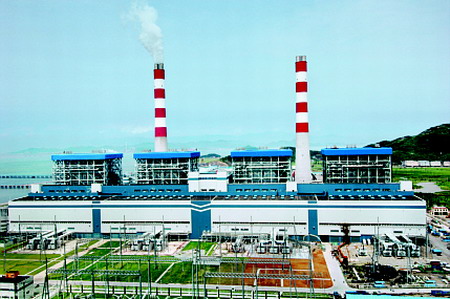
I liked this chapter, mainly because it showed a place close-to-home, that has made steps toward a greener future. I think that Plattsburgh, just as easily, could provide some kind of greener-tomorrow standards or suggestions. If the City of Plattsburgh showed that it cared, maybe it’s inhabitants would sense that it’s finally a time for change. Another thing that I like about this chapter, is that Kolbert also explains what going on in the opposite spectrum, China. In this, she tells that even if Burlington continues it’s efforts, it will all be for nothing, because Industrial China is on the rise. In this, I suppose, she intends to provide us with the notion that the entire world must make major changes to counteract this impending doom. In a way she makes a wedge of her own when explaining Burlington’s progress, which is interesting, I think.

In the last chapter, she makes it clear that something needs to be done now. Not tomorrow, not next week, right now some kind of massive wave of change needs to be blasted throughout our world. We all need to make a change. I like this portion, because it firmly stands by every statement she has made throughout the book. It is us that is the problem. We lack the will to change. It’s funny, I think I remember that line from the recent flick The Day the Earth Stood Still. It is the essential idea that we all must prove we can beat this, that intrigues me the most, as a reader. She continues to explain the surely catastrophic repercussions, and she continues to explain the stupidity of the Bush Administration.
The fact remains that the earth will survive, it will sustain what life survives the next century, and whatever happens, it probably won’t really effect us. This, she explains in so many words, is pretty much how the White House looks at the global warming crisis. Luck and resourcefulness are two human qualities that we all have, but simply find them hard to acknowledge. We have the will, we just need to tap it.

The Afterword is just one more collaborative effort to sink all of the facts and ideas from the book, into the readers minds forever. She explains what’s happening right now, and she shows us that New Orleans and Katrina is just the front page of it all. How many hurricanes? How many have we had in the last half century? What? It’s just a great way to leave us, right here, right now, amongst all the muddied debris and rotting flesh.

Sunday, November 29, 2009

On the Reading


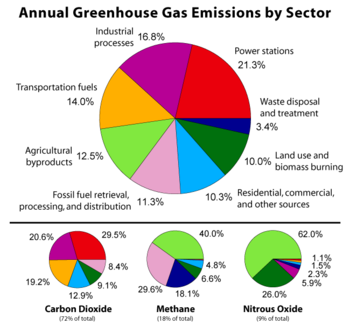
At this point, Kolbert certainly made it clear that global warming is real and the consequences are severe. Now she begins to explain what exactly our indivual CO2 emmissions mean to the situation. I really enjoy the statement, "Here in the United States, most of us begin generating CO2 as soon as we get out of bed." It puts a shot into my mind that makes me think of tiny little molecules slowly being released into the air as I go about my daily routine. After she deliberately explains what we're doing to the earth every day is destroying it, then she begins to give us real methods of action. She goes on to establish those scientists that are making the effort, however are lacking the support. Kolbert presents to the readers, every possible way we could revert the earth's CO2 levels to that of a pre-Y2K climate system. The problems that persists, as always, is ourselves. The answer is implemenation of these projected ideas to save our world. Without actual theory being put into play, what else can we do?


The next chapter, titled The Day After Kyoto, shined a light on certain presidential administration affairs on this subject. I'd like to say, firstly, that I'm sure whatever grudge Kolbert held against Dobriansky, is slightly less intense. Besides the entertainment of this chapter, as she continously bashes the Bush administration in every way she could devise, I feel it does explain the truth behind the matter. We've been told over and over that the Bush administration lacked the will to make an effort, after reading this chapter, I feel as though the government was blaitently denying the problem. This chapter is an inside look on how the political and economic goals do not include the safety of our planet, but rather the safety of our wallets. Power and greed continue to run the world, when will it end?

Sunday, November 22, 2009

The Reading


For me, chapter 5 is definitely the most boring segment of the book, thus far. I do like how she continues to thread the idea that this is all for our planet, which is in dire need of our help. One scientist proposed that within a hundred years, he wouldn't be surprised if most things were destroyed. I think that she uses her examples, for the most part, to display the severity of what could happen should we continue to choose (and she tells us that we do have a choice, from a geopolitical standpoint) not to change our destructive ways.

The most intriguing fact that Kolbert poses in chapter six, is that the planet is already nearly as warm as it ever has been in the past 420, 000 years. She explains in this piece that global warming causes the waters of earth to expand and in many cases, it has caused a certain amount of flooding that, in turn, has forced those human inhabitants to adapt to that specific area. I like this chapter a bit more than the last, for the concept that she implies when she writes of floating houses. She shows us all that even humans have had to begin to adapt to the recent climatic changes.

I'm wondering when she's going to pose some ideas to make all this go away. She's shown us in so many ways that it's real and we as a people, globally, can make a difference. The question is what can we do to change the political agenda of the world's industrial and greed-based ideals?

Friday, November 13, 2009

Chapter 4 Observations


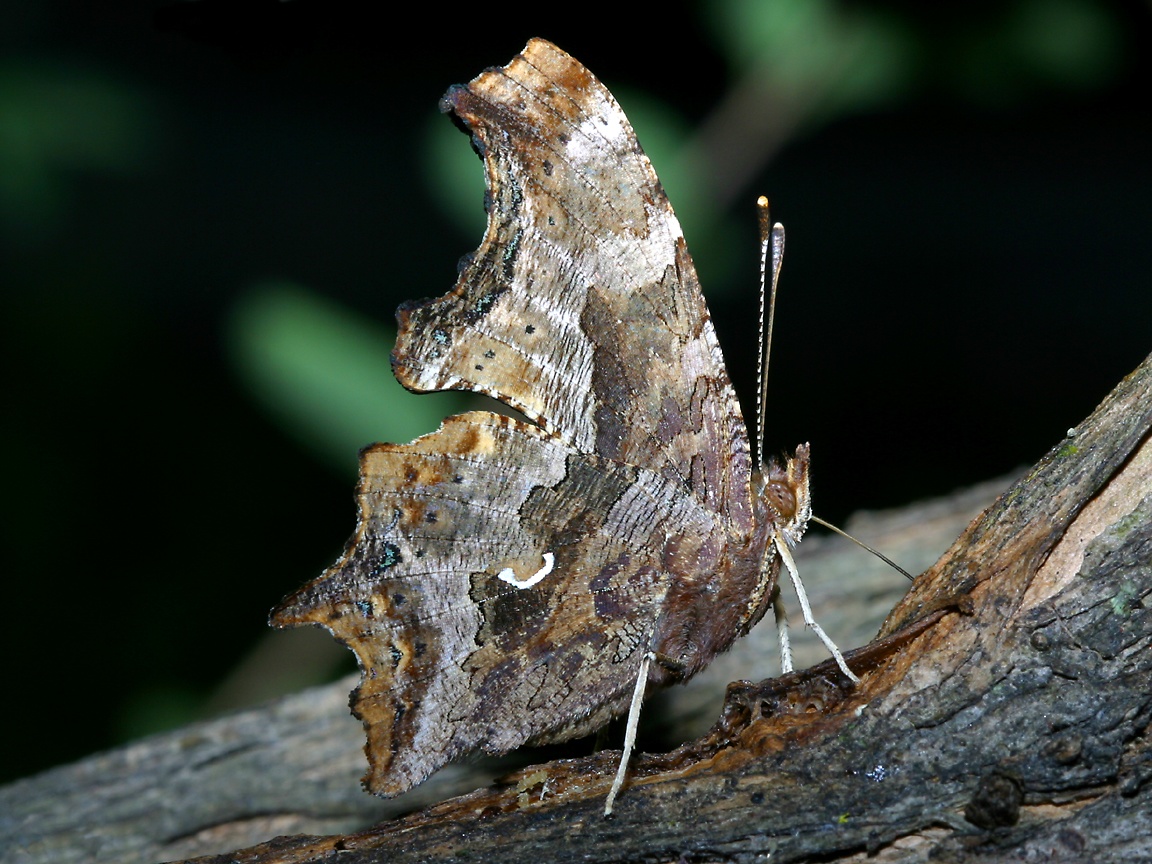
This was definitely an interesting chapter for me, specifically because I'm writing a paper on this subject. Extinctions have occurred throughout the history of our planet, however, recently we've discovered that the current rate of extinctions are related to global warming. In The Butterfly and the Toad, Kolbert explains the reality that species are on the move with thanks to climate change.
I think she's extremely successful in showing the reader that this is real, this is happening now and it's a big deal. The hard data and facts revealed by her interviews shows us that it's not a just few species at risk, and it's not in very highly selective regions of the globe. The effects she describes with the consistent migration of the comma is a great example to start out with and I think it's important to show early on that this subject relates to many places, which she does. She has top notch sources with the most up-to-date knowledge on the subject, though she tells it all in a story that we can see through her eyes.
Obviously, she chose these examples because they're all related to global warming and the changes it's created for these organisms. Some can adapt and some cannot, species die out and new forms of life take their place. The two main examples, however, are complete opposites, which shows that everything is being affected in different ways. What she really wants the readers to understand, I believe, is that the situation is proving to worsen and that the main threat is human.
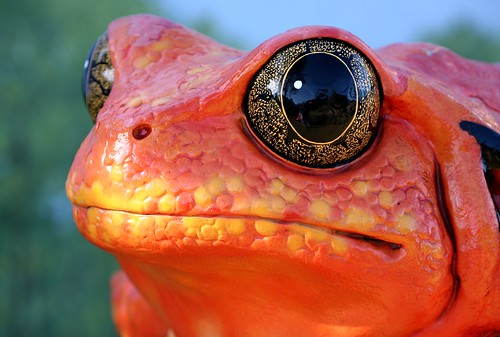
The most striking piece of information that I read was the fact that in a matter of a few years, an entire amphibian species, the golden toad was wiped out, simply due to a lack of rain. The part that really got to me, was when she explains that in one single year, the population went from 1,500 toads to a total of 8. Then that was it, another year or so and they were gone. This makes me think how easily and how quickly life can disappear. It was very disturbing to think of thousand of eggs and tadpoles burning to a crisp, in what must have been their birth sites since who knows when.
The quality of her information is equal to the quality of her writing, and that makes this a truly gripping chapter in the book. It's a serious look at what is happening to life on our planet due to global warming. The information is fairly easy to comprehend, but there's still a fortitude of scientific background, in the quotes, especially. The only thing I can think of, that I didn't like in this chapter, was that some of the information differentiated from research I'd recently done on this subject. Honestly, though, I think I'd rather believe her Kolbert.

Saturday, November 7, 2009

Question/Topic For Class

A question that I've thought a lot about, recently, is why isn't anybody doing anything? There's so much research and so many people are devoted to figuring this whole equation out, but for what? Action needs to be taken and it needs to happen now. When a large enough number of people come together to make this change a reality, only then could even the slightest changes begin. Do we, as a people, really even want to change?

About the Reading

(Meltwater in Greenland)

Chapters two and three held numerous significant pieces of evidence that support this theory of global warming. The first bit of evidence comes from about 150 years ago, when a scientist named Tyndall identified what we call the "natural greenhouse effect." This was explained through his invention of a device he called a ratio spectrophotometer, which allowed him to compare the radiation of gases in our atmosphere.
Klobert continues to shed some light on the history of this concept of global warming and who made the significant advancements to ultimately shed light on the reality of global warming. One scientist, Arrhenius, discovered that the burning of fossil fuels contributes to an increase of CO2 in our atmosphere. He assumed that no harm would come from this and obviously had no idea how important this discovery truly was. He also determined that doubling the CO2 in the atmosphere would cause a global temperature rise around nine and 11 degrees, a scientific reality that is still proven today.
A most obvious piece of evidence that global warming exists is what has been labeled as "The Keeling Curve." This chart shows the increase in CO2 concentration over the last 40 years. It shows that the CO2 parts per million have increased from 315 to over 380 since 1959. Next in chapter 3, she tells us that NASA's scientists have determined that throughout the 90s the Greenland ice sheet had been melting by 12 cubic centimeters per year.
Kolbert continues to talk about the realities of global warming, and the massive melting that has taken place in the Arctic over the last half a century. She talks of receding glaciers and the increase of ice flows and of course, the lessening of ice in the coldest places in the world.
I think the amount of evidence in just these two chapters is enough of a suggestion, for me, that global warming is a real threat. The fact that we now know how real and severe it is, and that we're still not doing anything about it, is the real shocker.
Again, I enjoy Kolbert's writing style, her storytelling. It's extremely important that she gives us a face to face look at the people most disturbed by global warming, which she does by introducing the readers to a range of people involved. From scientists to natives, she gives us a closer look at how these people's lives are effected, and also how they're advancing research on global warming. I think, for the most part, that she stays objective. She just makes it very, very clear that global warming is real and it is a threat. As to the quality of her explanatory powers, I believe she is quite gifted. She gives so much history and so much character in so few pages and the quote from page 58, describing that the proverbial doomsday clock "is already five past midnight," is a very strong statement.

Sunday, November 1, 2009

Three Questions/Observations


Firstly, I like the casuality of the writing. It's simple and easy enough for anybody to understand, and that's the point, isn't it? She states that this book is for everybody, and it's written to allow that possibility. It's a lot of new scientific information to soak in, so as to my judgements on the quality of writing, I believe it's got a great conversational style added to an abundance of facts related to global warming.


I like that it's mentioned very early on (page 2) that although she's been very specific places of interest, there are hundreds to thousands of places in the world that are seeing global warming's effects. It puts the threat in true perspective--some places are showing more severe effects, regardless, the entire planet is under effect.


I think it's great that by the end of the first chapter, she's suggested a range of ideas and theories that pertain to directly to us and global warming. This is a book that doesn't just tell you what global warming is, it shows each of us the severity and the simplicity in that we all must make a difference. Seems to me that the author fears the worst for our planet, and she tells a story of how it is and of how it could be.


That's basically what I've taken from the first pages, I like it so far.